Animal Rights
Animal Rights
What are blood farms, and why are pregnant horses being used for their blood? Learn the disturbing truth behind this little-known practice.
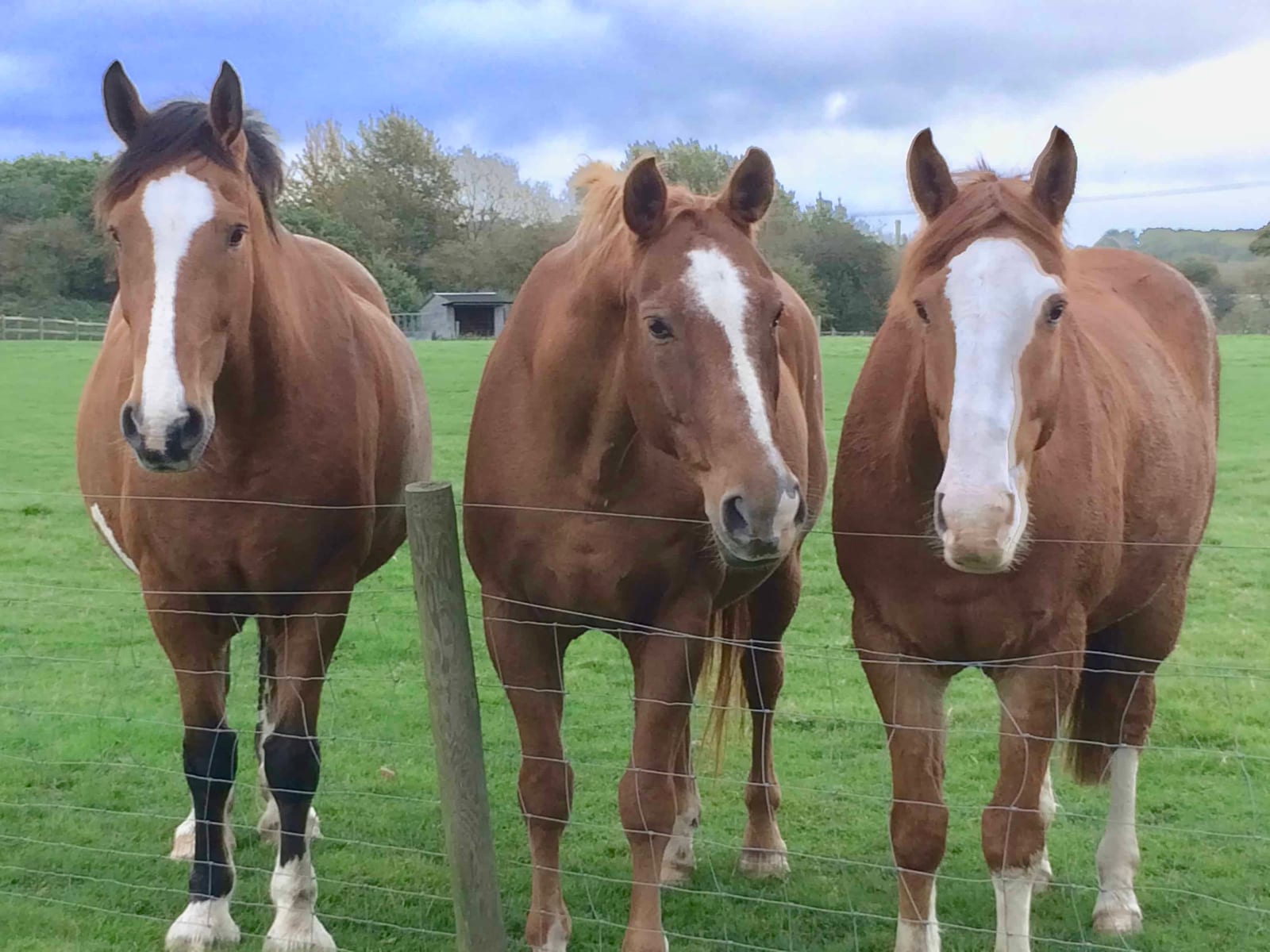
Something that has come to my attention recently was a post about blood farms. I was very confused by the term and what this could be. What is a blood farm and what are they doing to horses there..?
This is a practice in which the livestock industry keeps pregnant mares, manually inseminates them, and then takes their blood to use in pharmaceuticals for other livestock.
The sad truth is that this is a very complex and inhumane practice that affects animals at all levels. The horses are forcibly impregnated so that they can extract a specific hormone, Equine Chorionic Gonadotropin (eCG), which is commonly known as Pregnant Mare Serum Gonadotropin (PMSG) (Animal Welfare Foundation, 2024). This is done most notably in Uruguay, Argentina, and Iceland.
Blood farms are taking these hormones from mares to create drugs that will be used on other animals. Pharmaceutical companies then sell them to factory farms, specifically those in the livestock industry that raise pigs, cows, and sheep. They inject these drugs into the animals to manipulate their hormonal processes by synchronizing estrus cycles, triggering ovulation, and increasing litter sizes.
During early pregnancy, around five liters of blood can be taken from a mare each week (Animal Welfare Foundation, 2026).
The Guardian has written an article on the urge to ban these blood farms in Iceland:
“Pregnant Mare Serum Gonadotropin (PMSG) is extracted from pregnant horses in Iceland during the summer at ‘blood farms’, before being converted into powder and shipped around the world.” (Young-Powell, 2022)
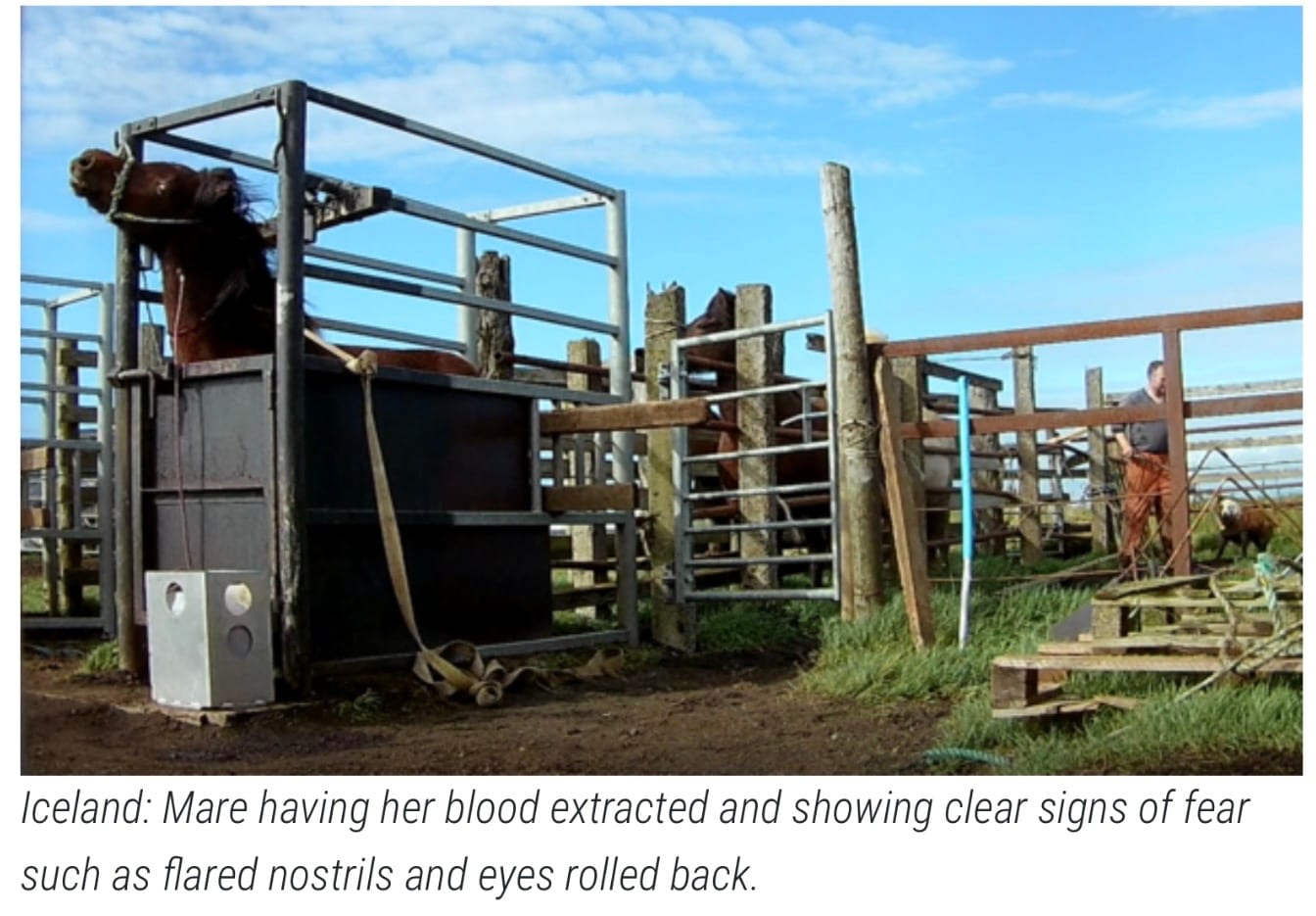
There have been 17 NGOs, including the Eurogroup for Animals, that have submitted complaints against Iceland to the European Free Trade Association (EFTA) (Young-Powell, 2022). The document explains that “blood collection for the production of PMSG should not be approved by the Icelandic authorities as it does not respect the principle of the 3 Rs (replacement, reduction and refinement) on which is based the relevant EU Directive.” (Eurogroup for Animals, 2022).
Blood farms are another example of how animals can be treated as resources rather than living beings. When we think about animal agriculture, we often think about animals being raised for their meat, milk, or eggs. But the industry does not only rely on the bodies of animals as food. Animals are also being used for their blood, hormones, reproductive abilities, and other biological products.
The Animal Welfare Foundation have wrote on important legal development concerning blood farms in Iceland in September 2026.
The European Free Trade Association Court ruled that extracting blood from pregnant mares to obtain the hormone PMSG is considered a scientific procedure and must therefore follow the animal welfare regulations that apply to experimental animals. This is an important step, but it has not prevented Iceland from continuing the practice because it does not prohibit blood collection. In fact, the pharmaceutical company Ísteka argued that blood collection should be considered an agricultural practice (Animal Welfare Foundation, 2026).
The more I learn about animal agriculture, the more I realize how many practices exist that most people have never heard of.
Blood farms raises an important question: how far are we willing to go to make animal agriculture more efficient?
Taking blood from pregnant mares to produce hormones that are then used to manipulate the reproduction of other farmed animals shows just how far the industry has gone to control and increase animal production.
Sources:
The Guardian. (2022). Iceland urged to ban ‘blood farms’ that extract hormone from pregnant horses. Retrieved from https://www.theguardian.com/environment/2022/may/16/iceland-urged-to-ban-blood-farms-that-extract-hormone-from-pregnant-horses
Eurogroup for Animals. (2022). Blood farms in Iceland: Official EFTA complaint filed. Retrieved from https://www.eurogroupforanimals.org/news/blood-farms-iceland-official-efta-complaint-filed
Animal Welfare Foundation. (2024). Iceland: PMSG Production in Iceland. Retrieved from https://www.animal-welfare-foundation.org/en/projects/blood-farms/iceland
Animal Welfare Foundation. (2026). EFTA Court Strengthens Protection of Blood Mares in Iceland. Retrieved from https://www.animal-welfare-foundation.org/en/investigations/blog/efta-gerichtshof-staerkt-schutz-von-blutstuten-in-island
We welcome volunteer writers who can explain a hard topic clearly and honestly, with sources.