Food Insecurity: How Animal Agriculture Deprives the Global Food Supply

The global food system is facing an unprecedented crisis of availability and distribution. While conventional discussions around hunger often focus purely on population growth or geopolitical conflict, the foundational driver of modern food scarcity is systemic inefficiency.
Meat-based food production creates global food insecurity primarily through resource diversion and structural waste. Funneling massive amounts of arable land, freshwater, and vital crops through livestock, rather than feeding human populations directly, drastically minimizes the total volume of available calories and essential nutrients in our global food supply.
The Mechanics of Global Scarcity: 4 Key Drivers
Industrial livestock production creates structural waste that compromises international food security through resource diversion and climate destabilization.
01
Macro-Nutrient Inefficiency and Calorie Dissipation
Livestock functions as a poor biological conversion mechanism for human energy needs. Research reveals it requires 9 calories of crop feed to yield 1 calorie of meat output—an absolute loss of 90% of food energy. Transitioning US livestock crops directly to human consumer markets could feed hundreds of millions of people immediately.

02
Monopolization of International Farmland
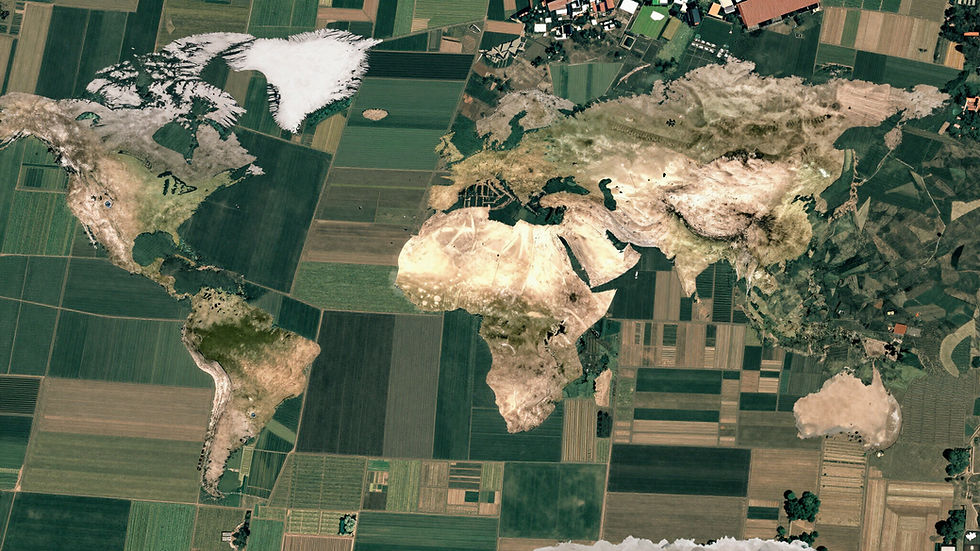
Livestock production occupies roughly 83% of global farmland yet supplies only 18% of the world's calories and 37% of global protein. Over two-thirds of all agricultural land is dedicated to feed crops or pasture, leaving only 8% for crops intended for direct human consumption, creating a massive land allocation disparity.
03
Economic Exploitation and Territorial Displacement
Wealthy nations trigger resource strain in low-income regions by repurposing fertile land for export-bound soy feed crops. This practice inflates domestic food prices, displaces local farmers from ancestral lands, and decimates regional food sovereignty, leading directly to severe local shortages in the Global South.

04
Anthropogenic Climate Change and Regional failure
Industrial livestock generates 14-18% of global greenhouse emissions—more methane than the entire transportation sector. The resulting climate volatility causes extreme weather like droughts and heat waves that ruin localized crop yields, degrade topsoil, and systematically compromise global food stability.

Data Breakdown: Institutional Analysis of Resource Allocation
Empirical research from leading scientific institutions demonstrates that a systemic transition toward plant-based agricultural models would close the global food gap entirely. The table above contrasts the stark realities of the current system against a optimized plant-based alternative.
Key Agricultural Metric
Animal Agriculture System
Plant-Based Model
Global Farmland Allocation
83% of total agricultural land
Approx. 20% to 25% of total land
Global Human Calories Supplied
18% of global pool
82% of global pool
Energy Input-to-Output Ratio
9:1 Calorie Deficit
1:1 Direct Efficiency
Note: Figures are approximate and may vary slightly by year and reporting body. Data current as of 2026.
Global Hunger: The Current Reality
These statistics outline the humanitarian crisis regarding the population currently suffering from severe nutritional deprivation.
Metric
Current Statistic
Reporting Agency
People who sleep hungry
Approximately 673 to 733 million people globally (roughly 1 in 11 to 1 in 12 people)
United Nations (FAO / WFP) & Concern Worldwide
Annual deaths from hunger
Approximately 9 million people every year (including millions of children under five)
United Nations World Food Programme (WFP)
Note: Figures are approximate and may vary slightly by year and reporting body. Data current as of 2026.
Agricultural Impact: If the World Turns Vegan
The data below represents the dramatic changes in resource efficiency, land recovery, and human feeding capacity under a unified plant-based agricultural model.
Metric
Current System
Plant-Based Alt
Sourcing
Global Farmland Used
4.1 billion hectares (83% of ag land)
1.0 billion hectares (75% reduction)
Our World in Data / Oxford University
Human Feeding Capacity
Fails current pool; 10% undernourished
10 billion+ people comfortably sustained
Our World in Data / Lancaster University
Systemic Calorie Loss
90% loss (9:1 calorie ratio)
0% waste (1:1 direct energy)
Humane World / A Well-Fed World
Note: Figures are based on current best-available modelling and may be updated as new research emerges. Data current as of 2026.
A Clear Choice for Global Abundance
The facts show a clear path for human survival. Global hunger isn't caused by a lack of food, but by how we use our resources. Today, animal agriculture uses 83% of our farmland to provide less than 20% of our calories. This system creates the very food insecurity we seek to end.
Moving toward a plant-based system is a proven solution. By reclaiming land and crops used for livestock, we can protect vulnerable communities and provide enough nourishment for a global population of over 10 billion people.